Patient resource

Understanding hearing loss

Hearing loss usually develops slowly, which is why the people around you often notice it before you do. This guide covers what people tend to notice, the three main types, and how to figure out your next step.

Not sure where you fit? Answer three questions

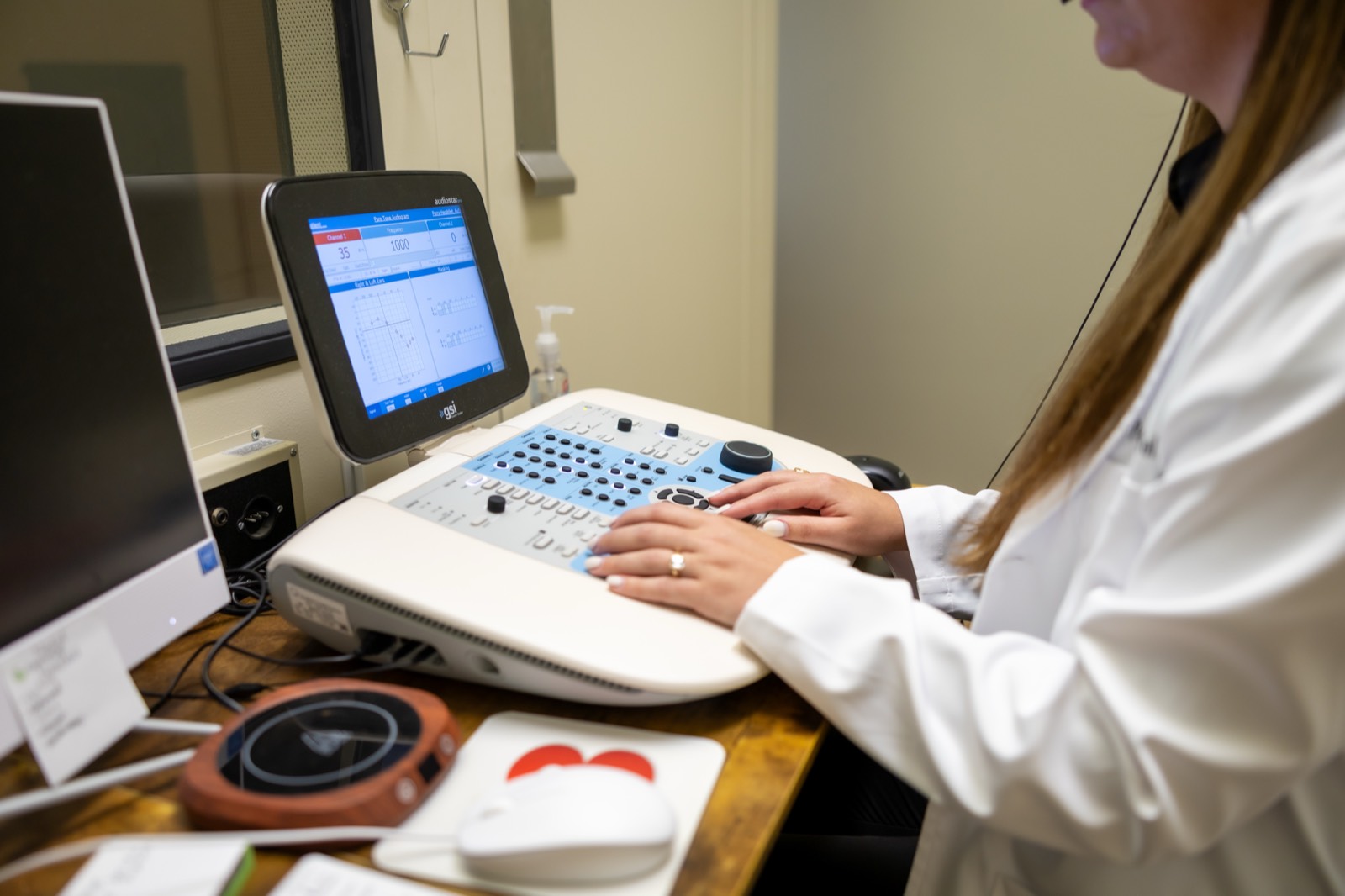
An audiologist at the audiometer console during a hearing test at Southaven Hearing Health Center

Signs people tend to notice

A practical self-check. Read through the situations below and note how many feel familiar.

  • VolumeYou turn the TV or radio up louder than others in the room prefer.
  • ConversationYou often ask people to repeat themselves, or fill in the gaps by guessing.
  • Background noiseRestaurants and group settings make it hard to follow the conversation.
  • TinnitusYou notice ringing, buzzing, or humming that others around you do not hear.
  • ClarityVoices sound muffled, as though people around you are mumbling.
  • Phone and distanceCalls are harder to follow, and hearing from another room has become a challenge.

One of these on its own is not a diagnosis. A few of them together are a good reason to schedule a hearing evaluation.

Three types of hearing loss

Hearing loss is grouped by which part of the hearing system is involved. The type shapes the plan.

Conductive

Sound is blocked before it reaches the inner ear, usually by something affecting the outer or middle ear.

Where it happens
Outer or middle ear
Often caused by
Earwax, fluid, or a mechanical blockage
Usually managed with
Earwax removal or medical care

Sensorineural

The inner ear or auditory nerve is affected. This is the most common type, and hearing aids are often part of the plan.

Where it happens
Inner ear or auditory nerve
Often caused by
Aging or noise exposure over time
Usually managed with
Hearing aids when appropriate

Mixed

Elements of both conductive and sensorineural loss are present, so the plan needs to account for both.

Where it happens
More than one part of the ear
Often caused by
A combination of the two above
Usually managed with
A combined plan, matched to you

How hearing loss affects daily life

Your type of hearing loss shapes your treatment plan. In daily life, though, the effects are often similar, and those everyday challenges are usually what bring people in.

Hearing is how you stay in the conversation, at the dinner table, on the phone, and out in the world. When a hearing change goes unaddressed, following along takes more effort. Some people gradually pull back from gatherings and phone calls without fully realizing why, and the people around them usually notice the pulling back first.

Researchers have documented links between untreated hearing loss, social isolation, and cognitive changes with age. That is why a hearing evaluation here looks at hearing alongside overall health, and why a MoCA cognitive screening, a short memory and thinking check, is included when it is useful.

An SHHC audiologist talking through a patient’s hearing history in the exam room
For parents

What it can look like in a child

Children rarely say that they cannot hear. A parent usually notices something indirect, and it can look like inattention, tiredness, or ordinary growing up.

Any one of these moments may have nothing to do with hearing. It is still worth asking rather than waiting it out.

If you are worried about a child’s hearing, give us a call. Tell us what you have been noticing and we will help you choose the next step.

Call 662-510-8247
For family

What it can look like in a parent

Hearing loss is usually noticed by the people nearby first. The person living with it adapts a little at a time, turning the TV up, filling in the missing words by guessing, taking the quieter end of the table. From the inside, very little feels like it changed.

Bringing it up can land like an accusation, so it helps to talk about the moments instead of the hearing. “You missed most of the conversation at dinner on Sunday” is easier to hear than “you need your hearing checked.” If it helps, you can call first and come with them to the visit.

Call 662-510-8247 and tell us what you have been noticing. You are welcome to call on their behalf and to stay in the room for the appointment.

Call 662-510-8247
Where to start

Find the right first conversation.

Answer a few plain questions about what you have noticed. The finder will name one next step. It takes about a minute.

What this does
Points you toward the right first step here: hearing evaluations, an earwax check, help with ringing, or a call as soon as possible.
What this cannot do
It cannot tell you what type of hearing loss you have or whether you need hearing aids. A hearing evaluation answers those questions.
Question 1

What made you look this up today?

Pick the closest answer. You can go back at any point.

Nothing you choose here is stored or sent.

Questions about hearing loss

It is very common. It tends to develop gradually over years, which is why the early signs are easy to overlook. A hearing evaluation tells you where your hearing stands and what, if anything, to consider next.

Not always. An evaluation identifies the type and degree of a hearing change. Some causes, including earwax buildup or fluid, can be addressed directly. When hearing aids are the right step, fittings are verified with Real Ear Measurement, a check of the sound the hearing aids deliver inside your ear.

With a hearing evaluation. It maps the softest sounds you can detect and how well you understand speech. The audiologist walks you through the results in plain language and discusses the options with you.

Yes. Reduce exposure to loud noise and use hearing protection around loud equipment or music. If you already notice changes, call 662-510-8247 to request a hearing evaluation.

Schedule an appointment at our Southaven office.

Call or send a message and we’ll help you schedule a hearing evaluation. Mon–Thu, 8:30–4:30 · last appointment 4:00.

5699 Getwell Rd, Bldg H, Ste 1, Southaven, MS · 662-510-8247

Request an Appointment

Rachel Huber, Au.D.
Rachel Huber, Au.D.
Audiologist

Yes. We verify fittings with Real Ear Measurement, so your hearing aids are matched to your prescription rather than to a software estimate.

We start with a conversation about your concerns and a look in your ears, followed by comprehensive hearing testing and a clear, plain-language explanation of your results. When it’s helpful, we’ll also include a brief cognitive screening.

Monday through Thursday, 8:30 AM to 4:30 PM, with the last appointment at 4:00 PM. We’re closed Friday through Sunday.

Our office

Find us on Getwell Road in Southaven.

5699 Getwell Rd, Building H, Suite 1
Southaven, MS 38672

Mon–Thu 8:30–4:30 · last appointment 4:00